

- University
- Academic
- Schools/Vocational Schools
- Vocational School of Justice
- Vocational School
- Vocational School
- Department of Banking and Insurance (Turkish)
- Department of Computer Programming (Turkish)
- Department of Foreign Trade (Turkish)
- Department of Graphic Design (Turkish)
- Department of Interior Design (Turkish)
- Department of Construction Technology (Turkish)
- Department of Occupational Health and Safety (Turkish)
- Department of Media and Communication (Turkish)
- Department of Architectural Restoration (Turkish)
- Department of Radio and Tv Programming (Turkish)
- Department of Civil Aviation Cabin Services (Turkish)
- Department of Civil Aviation Transportation Management (Turkish)
- Department of Tourism and Hotel Management (Turkish)
- Department of Applied English Translation
- Vocational School Of Health Services
- Vocational School Of Health Services
- Department of Child Development (Turkish)
- Department of Physiotherapy (Turkish)
- Department of Paramedic (Turkish)
- Department of Opticianry (Turkish)
- Department of Medical Documentation and Secreteriat (Turkish)
- Department of Medical Imaging Techniques (Turkish)
- Department of Medical Laboratory Techniques (Turkish)
- Department of Elderly Care (Turkish)
- School of Applied Management Sciences
- School of Foreign Languages
- Faculties
- Faculty of Arts and Sciences
- Faculty of Fine Arts and Design
- Faculty of Law
- Faculty of Communication
- Faculty of Business
- Faculty of Engineering
- Faculty of Engineering
- Department of Computer Engineering
- Department of Biomedical Engineering
- Department of Electrical and Electronics Engineering
- Department of Industrial Engineering
- Department of Food Engineering
- Department of Genetics and Bioengineering
- Department of Aerospace Engineering
- Department of Civil Engineering
- Department of Mechanical Engineering
- Department of Mechatronics Engineering
- Department of Software Engineering
- Faculty of Health Sciences
- Medicine
- Graduate School
- Common Courses
- Schools/Vocational Schools
- Research
- Research Centers
- Library
- Smart Campus
- Technology Transfer Office
- İzmir Sciencepark
- Continuous Education Center (EKOSEM)
- Children's University
- Ethics Committee
- Teaching and Learning Center (EKOEĞİTİM)
- Psychology Application and Research Center
- Researcher Training Coordinatorship
- Research Collaborations And Innovation Coordinatorship
- Campus
- INTERNATIONAL
- Contact
- 25TH YEAR
Department of Food Engineering
VCD 302 | Course Introduction and Application Information
| Course Name |
Analysis of Visual Culture
|
|
Code
|
Semester
|
Theory
(hour/week) |
Application/Lab
(hour/week) |
Local Credits
|
ECTS
|
|
VCD 302
|
Fall/Spring
|
3
|
0
|
3
|
4
|
| Prerequisites |
None
|
|||||
| Course Language |
English
|
|||||
| Course Type |
Service Course
|
|||||
| Course Level |
First Cycle
|
|||||
| Mode of Delivery | - | |||||
| Teaching Methods and Techniques of the Course | - | |||||
| National Occupation Classification | - | |||||
| Course Coordinator | - | |||||
| Course Lecturer(s) | ||||||
| Assistant(s) | - | |||||
| Course Objectives | The overall aims of this course are: • to analyse and interpret the increasing visualisation of contemporary culture • to develop specific visual and verbal skills for observing, analysing, describing and critiquing (audio)visual imagery from a range of diverse theoretical perspectives. • to interrogate the ways visual images contribute to the formation of identities and social environments. |
| Learning Outcomes |
The students who succeeded in this course;
|
| Course Description | This is a theoretical course that explores the meanings and effects of images, and ways of looking across a wide spectrum of visual culture: from painting and sculpture to print, packaging, photography, film, advertising, video games and fashion. It encourages students to develop a range of critical approaches to visual language and its importance both historically and contemporary. The course will thus touch upon a number of significant issues, such as globalization, postmodernism, sexuality and the construction of gender, commodification and mass consumption/production, and the production and reception of images of ethnicity and national identity. |
| Related Sustainable Development Goals |
|
|
|
Core Courses | |
| Major Area Courses | ||
| Supportive Courses | ||
| Media and Management Skills Courses | ||
| Transferable Skill Courses |
WEEKLY SUBJECTS AND RELATED PREPARATION STUDIES
| Week | Subjects | Related Preparation |
| 1 | Syllabus Introduction | None |
| 2 | What is Visual Culture? Visual Methodologies (I) | Rose, G. Visual Methodologies. London: Sage, 2007 (Chapter 3: ‘the good eye‘) |
| 3 | What is Visual Culture? Visual Methodologies (I) | Rose, G. Visual Methodologies. London: Sage, 2007 (Chapter 4: ‘Content analysis’) |
| 4 | What is a Sign? Visual Methodologies (II) | Williamson, J. De-coding Advertise-ments: Ideology and Meaning in Advertising. Lon-don: Boyars, 1978, pp. 1114, 1727, 99105. Rose, G. Visual Methodologies. London: Sage, 2007 (Chapter 5, ‘Semiology’) |
| 5 | Mythology and Second-order semiological system. | Rose, G. Visual Methodologies. London: Sage, 2007 (Chapter 5, ‘Semiology’) |
| 6 | Visual Methodologies (III) | Psychoanalysis’ in Rose G. Visual Methodologies. London: Sage, 2007 |
| 7 | Visualising Gender: Constructions of Femininity and Masculinity | ’Psychoanalysis’ in Rose G. Visual Methodologies. London: Sage, 2007, |
| 8 | Midterm Week | - |
| 9 | Postmodernism: Pastiche and Parody | Postmodernism and Popular Culture’. Practices of Looking. M. Sturken, et. al, Oxford: OUP |
| 10 | In-class presentations by students | None |
| 11 | Introduction to Discourse Analysis | Discourse Analysis I in Rose G. Visual Methodologies. London: Sage, 2007 |
| 12 | Visual Power: The Panopticon | ‘Over and Under Surveillance’ online article by Judy Chen |
| 13 | Introduction to Contemporary Art Theory | The Conspiracy of Art: Manifestos, Interviews,Essays’ by Jean Baudrillard, NY,2005 |
| 14 | Fashion and Identity | Barthes, R. The Fashion System. Berkeley and Los Angeles, California: University of California Press, 1990 |
| 15 | Review of the Semester | |
| 16 | Review of the Semester |
| Course Notes/Textbooks | Gillian Rose ''Visual Methodologies'' ISBN: 978-1-4739-4890-7 |
| Suggested Readings/Materials |
EVALUATION SYSTEM
| Semester Activities | Number | Weigthing |
| Participation | ||
| Laboratory / Application | ||
| Field Work | ||
| Quizzes / Studio Critiques |
-
|
-
|
| Portfolio | ||
| Homework / Assignments |
1
|
40
|
| Presentation / Jury | ||
| Project |
1
|
60
|
| Seminar / Workshop | ||
| Oral Exams | ||
| Midterm | ||
| Final Exam | ||
| Total |
| Weighting of Semester Activities on the Final Grade |
2
|
60
|
| Weighting of End-of-Semester Activities on the Final Grade |
1
|
40
|
| Total |
ECTS / WORKLOAD TABLE
| Semester Activities | Number | Duration (Hours) | Workload |
|---|---|---|---|
| Theoretical Course Hours (Including exam week: 16 x total hours) |
16
|
3
|
48
|
| Laboratory / Application Hours |
16
|
0
|
|
| Study Hours Out of Class |
0
|
||
| Field Work |
0
|
||
| Quizzes / Studio Critiques |
-
|
-
|
0
|
| Portfolio |
0
|
||
| Homework / Assignments |
1
|
24
|
24
|
| Presentation / Jury |
0
|
||
| Project |
1
|
48
|
48
|
| Seminar / Workshop |
0
|
||
| Oral Exam |
0
|
||
| Midterms |
0
|
||
| Final Exam |
0
|
||
| Total |
120
|
COURSE LEARNING OUTCOMES AND PROGRAM QUALIFICATIONS RELATIONSHIP
|
#
|
Program Competencies/Outcomes |
* Contribution Level
|
|||||
|
1
|
2
|
3
|
4
|
5
|
|||
| 1 | Being able to transfer knowledge and skills acquired in mathematics and science into engineering, |
-
|
-
|
-
|
-
|
-
|
|
| 2 | Being able to identify and solve problem areas related to Food Engineering, |
-
|
-
|
-
|
-
|
-
|
|
| 3 | Being able to design projects and production systems related to Food Engineering, gather data, analyze them and utilize their outcomes in practice, |
-
|
-
|
-
|
-
|
-
|
|
| 4 |
Having the necessary skills to develop and use novel technologies and equipment in the field of food engineering, |
-
|
-
|
-
|
-
|
-
|
|
| 5 |
Being able to take part actively in team work, express his/her ideas freely, make efficient decisions as well as working individually, |
-
|
-
|
-
|
-
|
-
|
|
| 6 |
Being able to follow universal developments and innovations, improve himself/herself continuously and have an awareness to enhance the quality, |
-
|
-
|
-
|
-
|
-
|
|
| 7 |
Having professional and ethical awareness, |
-
|
-
|
-
|
-
|
-
|
|
| 8 | Being aware of universal issues such as environment, health, occupational safety in solving problems related to Food Engineering, |
-
|
-
|
-
|
-
|
-
|
|
| 9 |
Being able to apply entrepreneurship, innovativeness and sustainability in the profession, |
-
|
-
|
-
|
-
|
-
|
|
| 10 |
Being able to use software programs in Food Engineering and have the necessary knowledge and skills to use information and communication technologies that may be encountered in practice (European Computer Driving License, Advanced Level), |
-
|
-
|
-
|
-
|
-
|
|
| 11 |
Being able to gather information about food engineering and communicate with colleagues using a foreign language ("European Language Portfolio Global Scale", Level B1) |
-
|
-
|
-
|
-
|
-
|
|
| 12 |
Being able to speak a second foreign language at intermediate level. |
-
|
-
|
-
|
-
|
-
|
|
| 13 |
Being able to relate the knowledge accumulated during the history of humanity to the field of expertise |
-
|
-
|
-
|
-
|
-
|
|
*1 Lowest, 2 Low, 3 Average, 4 High, 5 Highest
NEWSALL NEWS



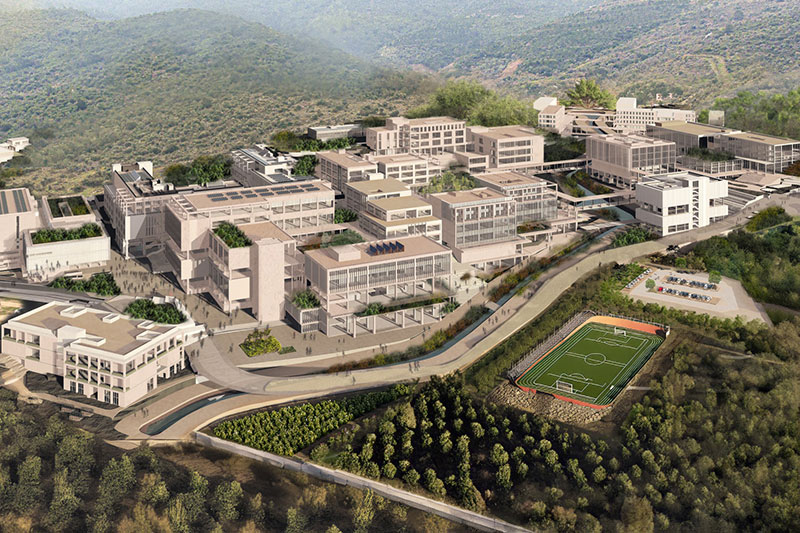
IZMIR UNIVERSITY OF ECONOMICS GÜZELBAHÇE CAMPUS
DetailsGLOBAL CAREER
As Izmir University of Economics transforms into a world-class university, it also raises successful young people with global competence.
More..CONTRIBUTION TO SCIENCE
Izmir University of Economics produces qualified knowledge and competent technologies.
More..VALUING PEOPLE
Izmir University of Economics sees producing social benefit as its reason for existence.
More..
You are one step ahead with your graduate education at Izmir University of Economics.